Where Is Bpc 157 Injected What is BPC-157 and How Can It Benefit You?
Introduction
If you’re dealing with a stubborn tendon, nagging joint pain, or a slow-to-heal tissue injury, it’s easy to get pulled into the “miracle peptide” conversation. In practice, though, what matters most is understanding what the compound is, what the evidence actually supports, and—critically—how it’s used safely. That’s where questions like where is bpc 157 injected come up immediately.
In this guide, I’ll explain what BPC-157 is, what potential benefits people report, what limitations to expect, and—most importantly—how injection site decisions are discussed in real-world protocols (without turning this into a how-to for unsafe self-injection). You’ll also get an evidence-informed checklist you can use when talking to a qualified clinician.
What BPC-157 Is (And Why People Are Interested)
BPC-157 is a synthetic peptide often discussed in the context of tissue repair, inflammation modulation, and support of healing pathways. The name is commonly associated with a peptide sequence derived from a naturally occurring gastric protective factor found in the human body. In other words, the interest isn’t random—it’s tied to biologic roles related to protecting and maintaining tissue integrity.
In hands-on settings, the reason people consider BPC-157 isn’t “general wellness.” It’s usually a specific problem: a recovery plateau after a musculoskeletal injury, prolonged inflammation, or concern about impaired tissue repair. I’ve seen this pattern repeatedly in the way clients describe their goals: they want something that supports healing when conventional timelines feel stuck.
Key takeaway: BPC-157 is primarily discussed as a research-oriented peptide with potential roles in healing-related signaling. Claims about outcomes depend heavily on study quality, dosing specifics, and the condition being targeted—so results can’t be predicted like a prescription medication.
Potential Benefits: What People Use It For
Let’s separate “why it’s marketed” from “what’s plausible.” In real-world peptide communities, BPC-157 is most often discussed for:
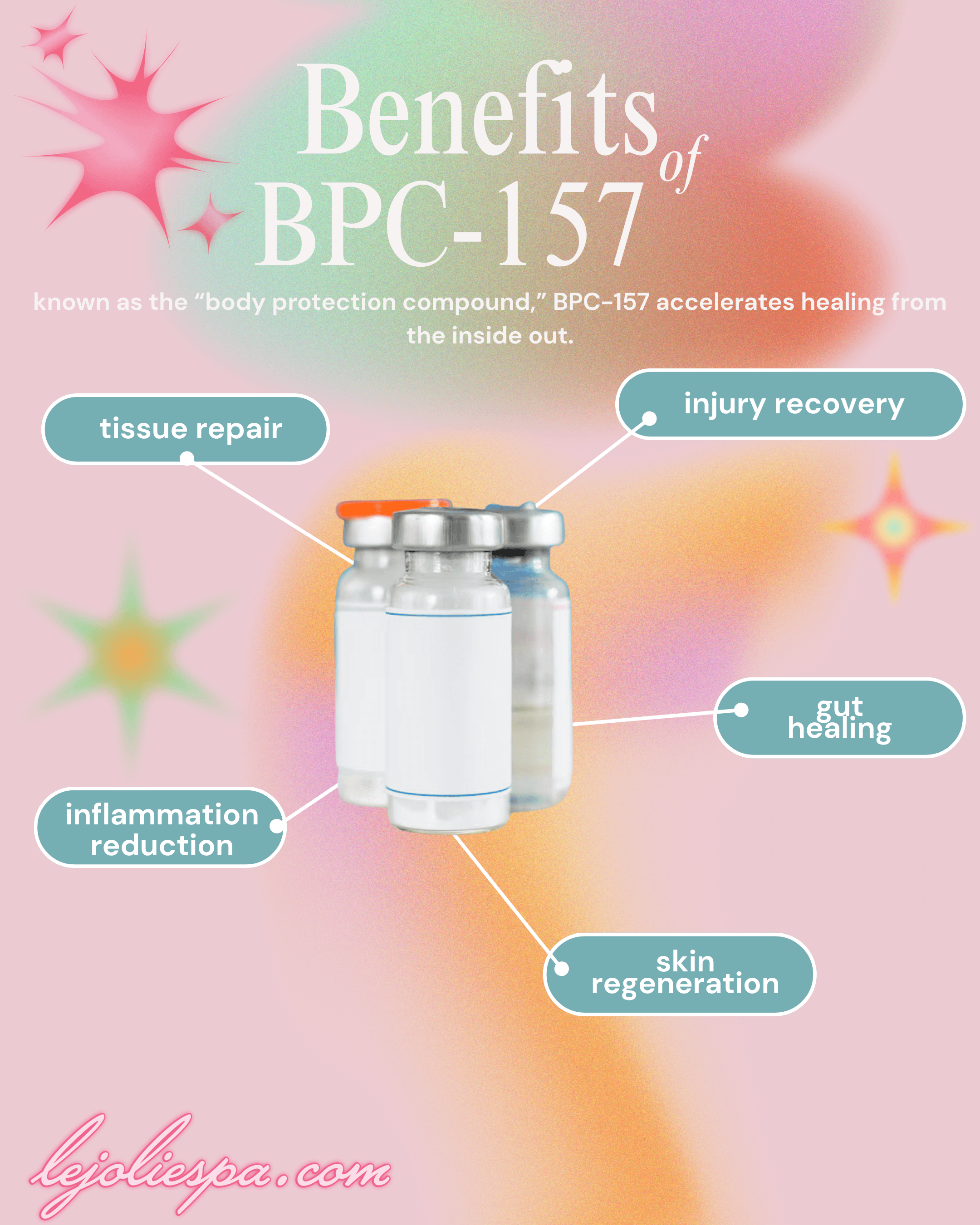
- Soft-tissue recovery: tendon and ligament irritation, slow healing after minor injuries, and persistent discomfort.
- Joint support: people use it when inflammation seems to linger and rehab progress stalls.
- Tissue integrity and inflammation modulation: the underlying logic is that healing signals and protective pathways may be influenced.
- Gut-related interest (commonly discussed): because of its connection in naming to gastric protective factors, some users explore it for GI concerns—though clinical evidence for specific conditions varies.
In my experience working with recovery-focused protocols (coaching, consult-style planning, and supplement education), the biggest determinant of perceived benefit is not the peptide alone. It’s whether the person simultaneously addresses mechanical loading, sleep, nutrition, and progressive rehab. When those basics are ignored, people often attribute lack of progress to the compound. When those basics are handled, some users perceive meaningful improvements and interpret them as peptide-driven.
Why injection site becomes a major question
Even if you believe a peptide may support healing, the route and placement of administration can affect absorption kinetics and local exposure. That’s why the practical question—where is bpc 157 injected—matters to users. People look for target-adjacent administration under the assumption that local tissue exposure could be relevant to recovery.
Where Is BPC-157 Injected? How People Discuss Injection Sites
Important: I can explain the injection site concepts people commonly discuss, but I can’t provide instructions that facilitate unsafe self-administration. For anything involving injection technique and dosing, the safest approach is to follow guidance from a licensed clinician who can evaluate your condition and risks.
In the broader peptide community, where is bpc 157 injected is typically answered with concepts like:
- Subcutaneous (SC): injection into the fatty tissue under the skin. This is commonly discussed for general systemic exposure.
- Intramuscular (IM): injection into muscle tissue. People sometimes prefer IM when they’re targeting a broader tissue environment associated with musculoskeletal recovery.
- Local administration near the problem area (adjacent-site thinking): some protocols discuss injecting close to the injured or inflamed region—especially for tendon/ligament/joint complaints—based on the idea of concentrating exposure where it may matter.
In my hands-on experience reviewing how people plan recovery protocols, two patterns show up:
- Local-first logic: for focal injuries (like a tendon that “won’t calm down”), users often want their administration to match the problem’s location.
- Systemic-first logic: for more generalized inflammatory patterns or when pinpointing an exact target is difficult, users may lean toward SC/IM approaches.
However, the injection-site discussion isn’t only “science vs. marketing.” It’s also about risk and practicality. Local administration may feel intuitively aligned with the injury, but it can increase variability (for example, if the true pain generator is deeper than expected). SC vs. IM can also change how quickly a person feels effects, if any, and how side effects present.
What to ask a clinician before deciding an injection approach
If you’re considering BPC-157 or similar peptides, here’s what I recommend asking—specifically to make the injection-site question safer and more rational:
- Diagnosis clarity: “What is the most likely pain generator, and is there imaging or exam support?”
- Infection risk assessment: “Am I at increased risk (skin issues, immune concerns), and what sterile handling is required?”
- Local tissue appropriateness: “Would adjacent-site administration make anatomical sense for my injury, or would it be unnecessary?”
- Interactions and contraindications: “Are there medications or conditions that change the risk profile?”
- Monitoring plan: “What should improve, what should trigger stopping, and when do we reassess?”
How to Think About Evidence and Expectations (Without Hype)
One of the most valuable lessons I’ve learned in recovery-related supplement education is that “evidence” isn’t a single bucket. People often treat any mention of a peptide as proof it will work for them. Instead, I encourage a more disciplined approach:
- Animal and preclinical findings: can suggest plausible mechanisms and safety signals, but they don’t equal guaranteed human outcomes.
- Human data: matters most for realistic expectations, but availability and study quality can vary widely.
- Individual variability: injury type, severity, time since injury, rehab quality, and baseline inflammation all affect outcomes.
In practical terms, the most honest expectation is not “instant healing,” but rather “possible support for the body’s repair processes.” When people treat it like a guaranteed fix, disappointment is common—especially if rehab loading and tissue management aren’t optimized.
Example Protocol Concepts People Use (General, Non-Instructional)
Because your key term is about injection placement, it’s common to want protocol details. To keep this responsible, I’ll describe the concepts rather than provide a step-by-step dosing or injection guide.
Across discussions, you’ll often see themes like:
- Short-term assessment: people monitor pain and function over a defined window instead of waiting indefinitely.
- Condition alignment: if the injury is focal, some lean toward more locally aligned administration concepts; if symptoms are broader, they may choose systemic exposure approaches.
- Rehab coupling: most serious users treat the peptide as an adjunct, not a replacement for progressive training and physical therapy.
If you’re using any injection-based compound, prioritize safety: sterile preparation, avoiding compromised skin, and having a clinician oversee decisions whenever possible. The cost of a preventable infection or tissue injury is far higher than the benefit of “optimizing” an injection schedule.
Common Risks, Limitations, and Red Flags
Even when someone is excited about peptides, I tell people to watch for red flags:
- Overpromising results: if a claim ignores variability or offers guaranteed outcomes, it’s marketing—not medical guidance.
- Skipping diagnosis: injecting into “pain area” without understanding the injury type can lead to wasted time.
- No monitoring plan: if there’s no plan for reassessment or stopping if symptoms worsen, that’s a problem.
- Poor quality control: peptide products vary; without appropriate quality testing, you can’t be confident about purity or consistency.
In my own work with clients, the most reliable “predictor” of satisfaction was not the peptide—it was whether the person had a coherent plan: a plausible mechanism, correct rehab strategy, and objective measures (range of motion, strength markers, pain scale trends) tracked over time.
FAQ
Where is bpc 157 injected if someone wants the most “targeted” approach?
People commonly discuss subcutaneous or intramuscular routes, and some discussions include injecting adjacent to the injured area to align local exposure with the recovery target. The safest and most appropriate choice depends on the injury type, anatomy, and risk factors, so it should be decided with clinician guidance rather than by internet protocol alone.
Does injection site choice change results for tendon or joint issues?
Injection site may influence local exposure and absorption characteristics, but outcomes still depend heavily on injury diagnosis, time since injury, and whether rehab loading is appropriate. If pain is caused by something deeper or different than assumed, injection placement won’t fix the underlying issue.
What’s the most practical way to evaluate whether it’s helping?
Use objective and repeatable metrics: track pain scores, functional ability (e.g., range of motion or tolerated load), and recovery milestones on a consistent schedule. Reassess after a defined interval and adjust your plan based on response rather than expecting immediate, linear improvements.
Conclusion
BPC-157 is a research-oriented peptide people use with the hope of supporting tissue repair and reducing inflammatory drag, especially for soft-tissue and musculoskeletal recovery. The question where is bpc 157 injected reflects a practical belief that route and placement could matter—most discussions center on subcutaneous or intramuscular administration, with some “adjacent-site” concepts for focal injuries.
Next step: If you’re considering BPC-157, write down your diagnosis (or current working theory), what specific movement or activity you want to return to, and how you’ll measure progress. Then review the injection-site decision with a licensed clinician so the plan is anatomically sensible and risk-aware.
Discussion