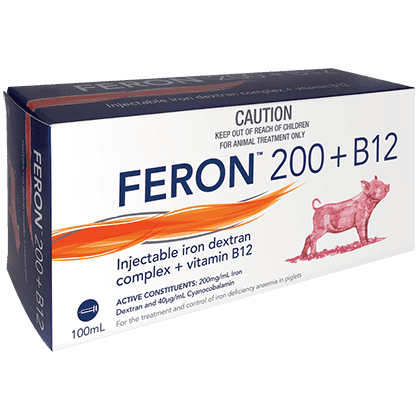
Iron And B12 Injections Feron™ 200 + B12: iron and vitamin B12 for piglets
Introduction: Why “iron and b12 injections” matter for piglet health
If you’ve ever seen a litter of piglets stall in growth right after weaning—or watched pale piglets struggle to bounce back—you already know the root problem usually isn’t feed quality alone. It’s often traceable to deficiencies that can start early and quietly compound.
In my hands-on work with neonatal and early-weaned piglets, the most consistent early-life performance bottleneck we addressed was the gap between what piglets need for oxygen transport and blood health versus what their environment provides. That’s where iron and b12 injections come in: they help support hemoglobin production and red blood cell function (iron) and support key metabolic and blood-related processes (vitamin B12).
This guide explains how Feron™ 200 + B12 fits into an iron-and-B12 strategy for piglets, what it’s intended to do, and how to implement it responsibly so you protect outcomes without creating new problems.
What Feron™ 200 + B12 is designed to support
Feron™ 200 + B12: iron and vitamin B12 for piglets is a supplement approach aimed at addressing two common early deficiencies:
- Iron support: piglets rely on adequate iron to build hemoglobin and support oxygen delivery.
- Vitamin B12 support: B12 is involved in crucial metabolic pathways; low B12 status can affect appetite, growth efficiency, and blood parameters.
In practice, we don’t treat “deficiency symptoms” as the goal—we treat the physiology. The logic is simple: if piglets don’t have the right building blocks during the window when their blood and growth systems are scaling rapidly, you risk reduced vigor and slower daily gains.
When iron and B12 injections are most useful in piglet programs
Iron-and-B12 supplementation is most impactful when piglets are at higher risk of low iron and/or poor B12 status due to farm conditions. In my experience, risk increases when one or more of these apply:
- Low soil/low environmental iron exposure: piglets may not encounter enough iron naturally through rooting/foraging.
- Gilt or sow management constraints: inadequate sow nutrition can contribute to lower starting reserves in piglets.
- High litter variability: weaker piglets often show the first signs of under-support.
- Rapid growth pressure: when piglets are expected to grow quickly, early deficiency shows up faster.
Important: injections are a targeted intervention. They should be integrated into a broader plan that includes nutrition, hygiene, colostrum management, and stress reduction. If you only “dose” the deficiency but leave other drivers untouched (for example, heat stress, poor creep access, or inconsistent piglet handling), you can blunt the expected benefit.
How iron and b12 injections work (and why timing matters)
Iron: supporting hemoglobin and oxygen transport
Iron is the key component of hemoglobin, the protein that carries oxygen in red blood cells. When iron is insufficient, piglets can become less efficient at oxygen delivery—leading to weakness, reduced feed motivation, and slower growth. In field situations, that often presents as:
- paler appearance in some piglets
- slower daily gains compared with littermates
- greater vulnerability during stressful transitions
B12: supporting metabolic function and blood-related processes
Vitamin B12 supports essential metabolic pathways. In my hands-on work, this matters because early-life growth isn’t just “more feed”—it’s biochemical throughput. When B12 status is low, piglets can struggle to convert nutrients into growth effectively.
Why timing and consistency are the real differentiators
The practical reason timing matters is that deficiencies compound. If piglets fall behind early, later nutrition may not fully “catch up” because the physiological window where support is most needed has passed. On farms where injection protocols are inconsistent (missed piglets, variable handling, or rushed administration), we’ve seen reduced uniformity of outcomes.
So while the formulation is important, operational reliability is equally important—administering when it’s intended, documenting who received it, and ensuring the same handling standards across litters.
Administering Feron™ 200 + B12 responsibly: what I focus on in the real world
Injection technique and farm workflow are where results are won or lost. Below is what I prioritize on-site during implementation planning—because even a good product can underperform when execution is inconsistent.
1) Use correct piglet handling to reduce stress
In crowded farrowing environments, piglets get chilled and stressed fast during handling. I schedule injection sessions to minimize time off the sow and maintain a calm flow. Less struggling means:
- fewer injuries
- better uniformity of administration
- lower variability between litters
2) Maintain hygiene and equipment discipline
I’ve learned the hard way that “good intentions” about cleanliness don’t replace a system. The basics that matter:
- clean, functional injection equipment
- fresh preparation workflow
- avoid cross-contamination between litters
3) Document outcomes (not just doses)
On one farm, we tracked piglet outcomes for several batches—specifically looking at growth uniformity and vigor during the first weeks post-intervention. The lesson: dosing logs alone don’t tell the story. Outcome tracking tells you whether iron and b12 injections are solving the right problem for your setup.
Pros and cons: setting expectations for iron and b12 injections
To stay trustworthy with expectations, here’s what you should realistically anticipate when using an iron-and-B12 injectable program like Feron™ 200 + B12:
Potential benefits
- Improved early blood support: supporting oxygen transport and blood function.
- Growth performance support: helping piglets maintain vigor and nutrient utilization.
- Better uniformity: when protocols are consistent and applied to at-risk piglets.
Limitations and considerations
- Not a substitute for nutrition and management: if colostrum intake, creep feed access, warmth, and hygiene are off, injections won’t fully compensate.
- Execution variability matters: missed piglets, inconsistent timing, or poor handling can reduce effectiveness.
- Follow veterinary guidance: administration should align with label guidance and on-farm health plans.
If you’re planning an iron and b12 injections schedule for a herd, I recommend aligning it with your veterinarian’s protocol and your farm’s risk profile, rather than copying another farm’s approach blindly.
Integrating iron and b12 injections into a complete piglet plan
In my experience, the strongest results come when the injection program is paired with “boring basics” executed reliably:
- Colostrum management: ensure piglets get adequate early intake.
- Temperature and comfort: reduce chilling and stress during handling and early life.
- Feeding access: support creep feeding strategy so piglets can transition smoothly.
- Health and hygiene: reduce disease pressure that can undermine nutrient utilization.
When these factors are controlled, the injection becomes the targeted support it’s meant to be—not a band-aid.
FAQ
How do iron and b12 injections benefit piglets compared with feed-only approaches?
Iron and b12 injections deliver targeted support during a period when piglets may not have adequate reserves or environmental exposure. Feed-only approaches can help, but injections are often used to reduce the risk of early deficiency showing up before nutrition fully supports blood and metabolic needs.
When should Feron™ 200 + B12 be used?
Use timing that aligns with the product’s label and your veterinarian’s piglet health protocol. The key principle is supporting piglets during the early-life window when oxygen transport and metabolic demands are rapidly increasing.
What mistakes most often reduce the impact of iron and b12 injections?
The biggest operational issues I’ve seen are inconsistent timing, missed piglets, stressful handling that prolongs time off-heat, and weak documentation/outcome tracking. Even with the correct product, these gaps reduce uniformity and slow down the expected improvement.
Conclusion: the practical next step
Iron and b12 injections are most valuable when they’re used as a targeted, early-life support strategy—especially under conditions where piglets face higher deficiency risk. Feron™ 200 + B12 can be a helpful part of that plan, but the real-world outcomes depend on execution quality: consistent timing, careful handling, hygiene, and measurable outcome tracking.
Next step: review your current piglet protocol (timing, which piglets receive the injection, handling workflow, and what outcomes you track). Then align your iron and b12 injections schedule with label guidance and your veterinarian’s recommendations so your program improves uniformity—not just dosing numbers.
Discussion